Finding the Gap Is the Easy Part.Closing It Is the Work.
Every finding starts in a spreadsheet with good intentions. Then the owner column goes blank, the due date passes quietly, and the examiner finds it before you do.
Fig. 01 · The Tracker, as Found on the Shared Drive
Actions Scattered Across Tools
Gaps land in spreadsheets and email threads, with no single view of what is open and what is overdue.
No Line Back to the Rule
A remediation task disconnected from the obligation it closes is impossible to defend later.
Closure Without Proof
Marking something done is not the same as holding the evidence that it was actually fixed.
Every Finding Gets a Workflow. Every Workflow Gets Closed.
Kanban, list, and an escalation board surface what is moving and what is slipping, every ticket tied to the obligation it closes.
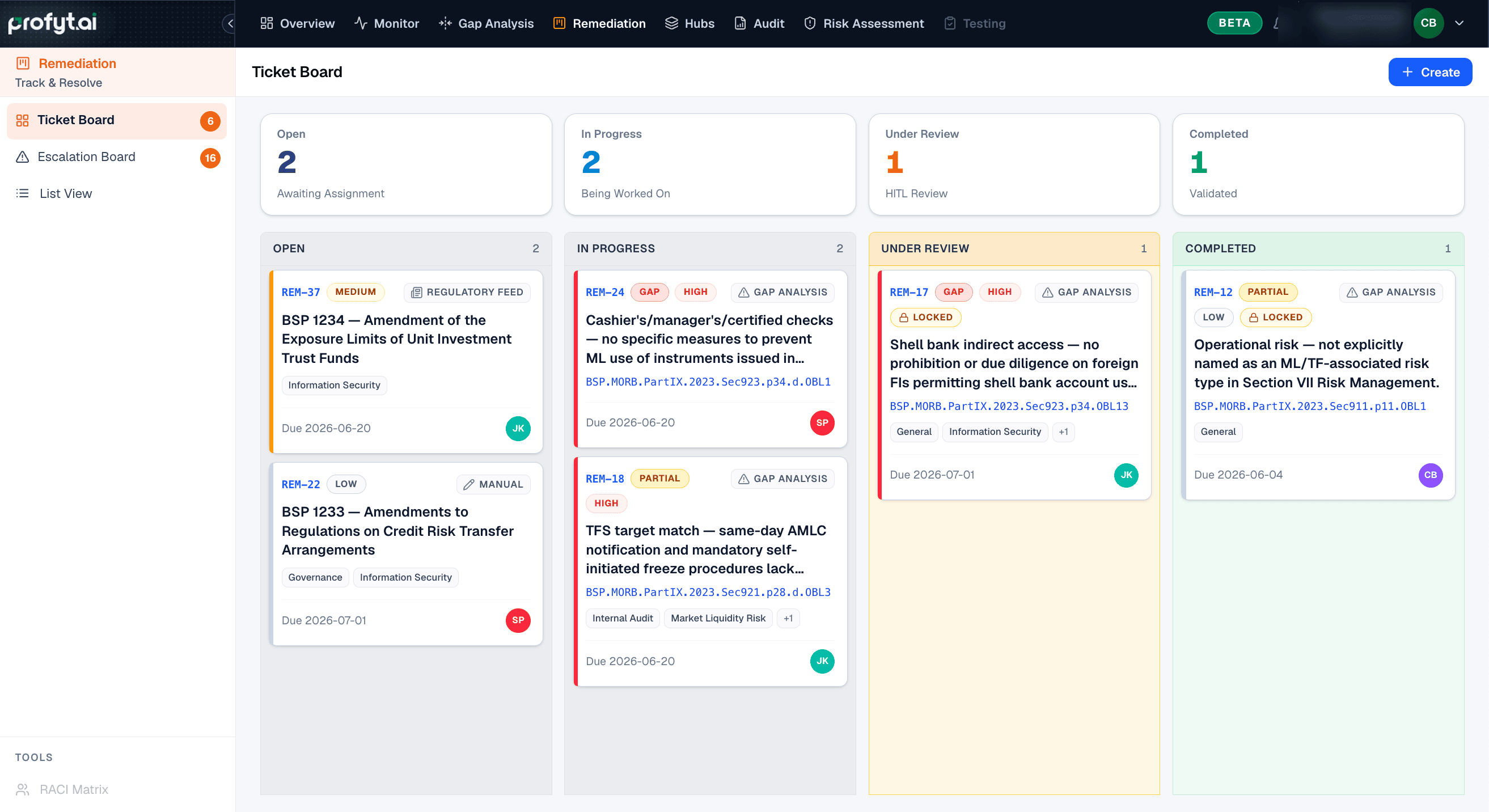
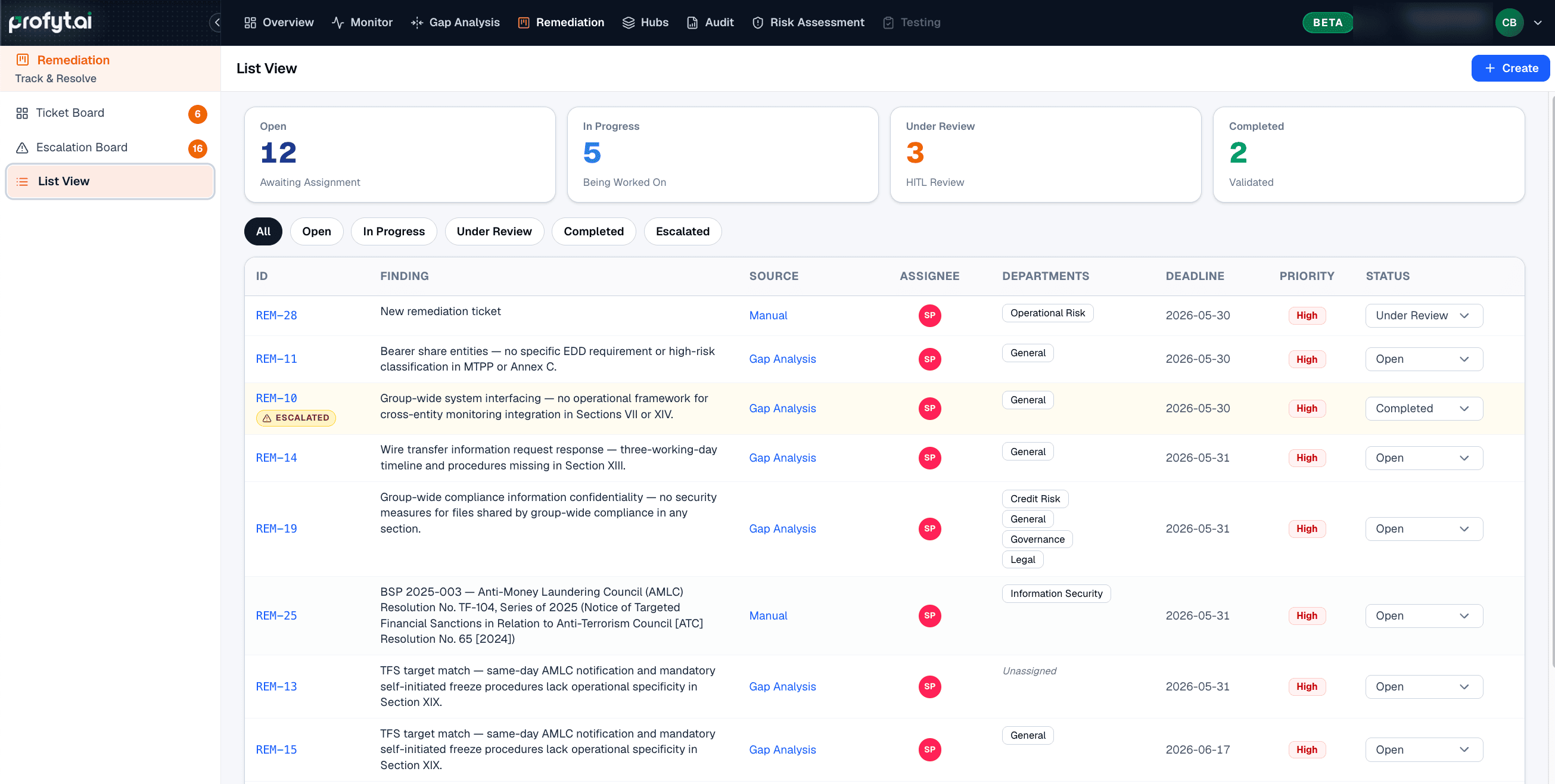
Kanban and List Views
Work the board or triage the table, same data.
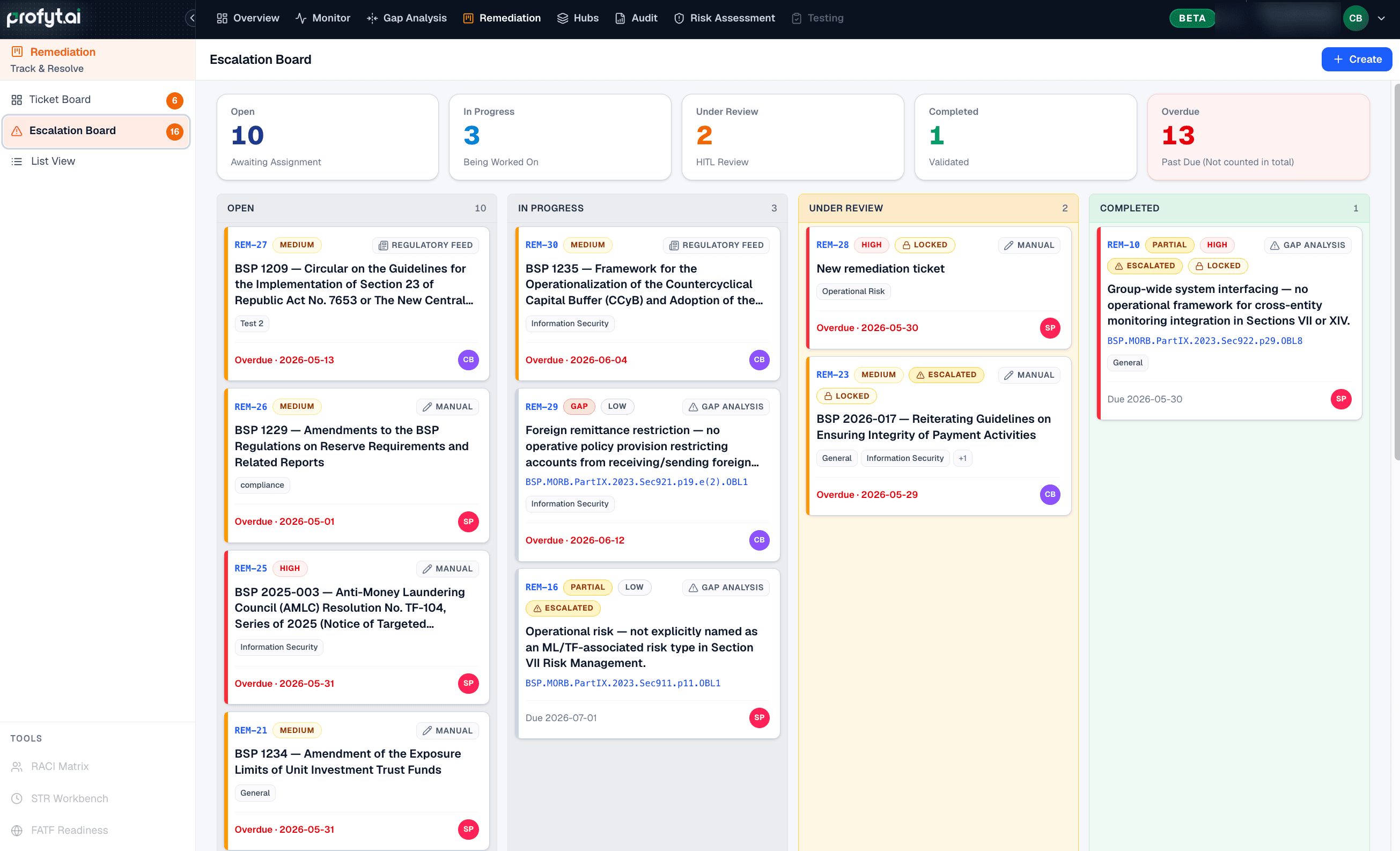
Escalation Board
Overdue and escalated work surfaced automatically.
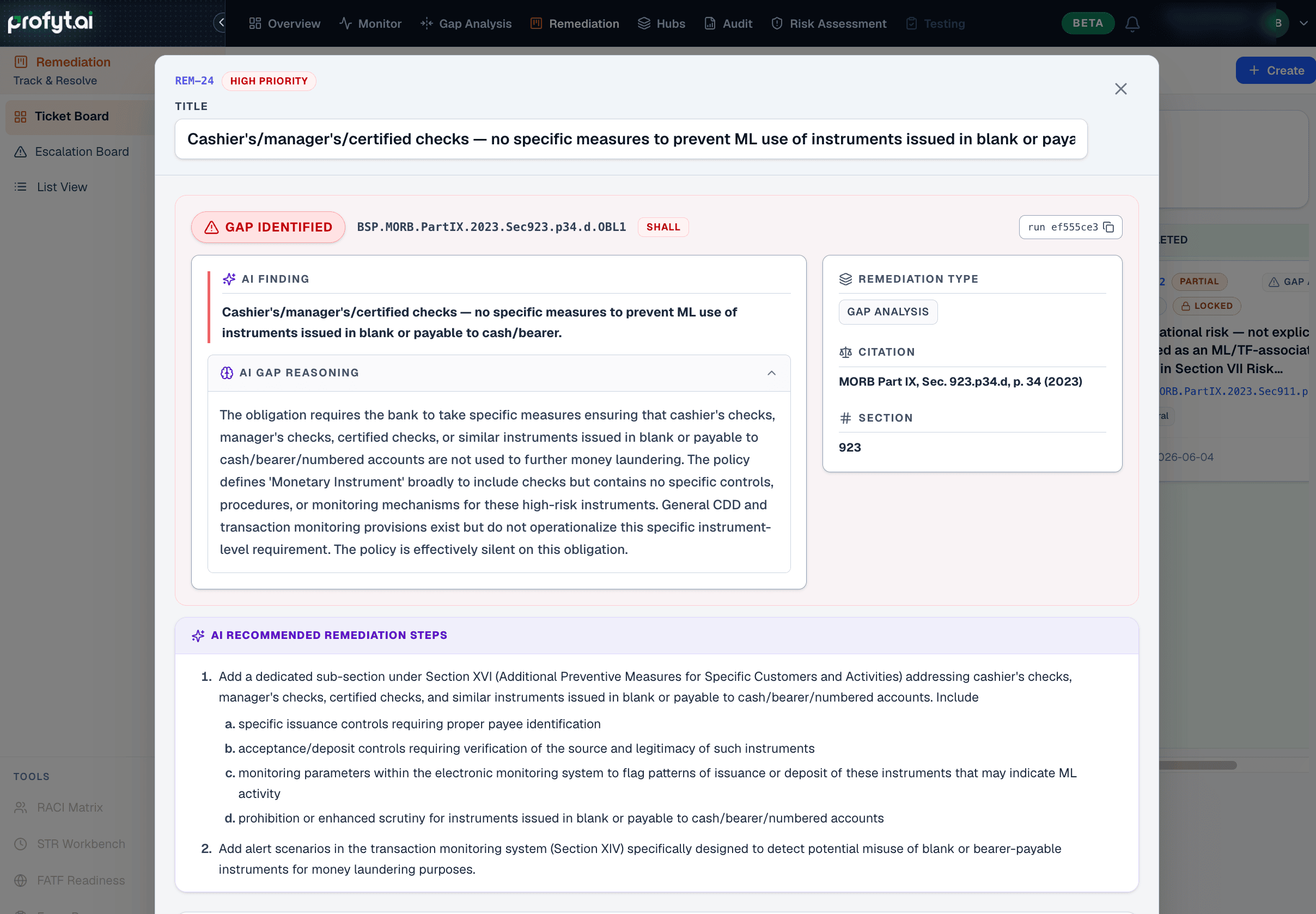
Tied to the Obligation
Every ticket traces back to the gap it closes.
Holding and Review Built in
Supports a monitoring window before a remediation is closed, as supervisors expect.
Shown · Escalation Board · Overdue + Escalated
From Gap to Sign-off.
Work the Board
Out of the spreadsheet, onto a board that moves.
Every ticket moves through Open, In Progress, Under Review, and Completed on one Kanban board.
Catch What Is Slipping
See it slip before the examiner sees it slipped.
The escalation board surfaces overdue and escalated tickets before they become findings.
See the Whole List
Nothing hides in row 47 anymore.
Switch to a sortable table to triage by owner, priority, and due date.
Open the Ticket
Context lives on the ticket, not in a reply-all thread.
Each ticket carries the finding, the reasoning, and the recommended steps, tied to its obligation.
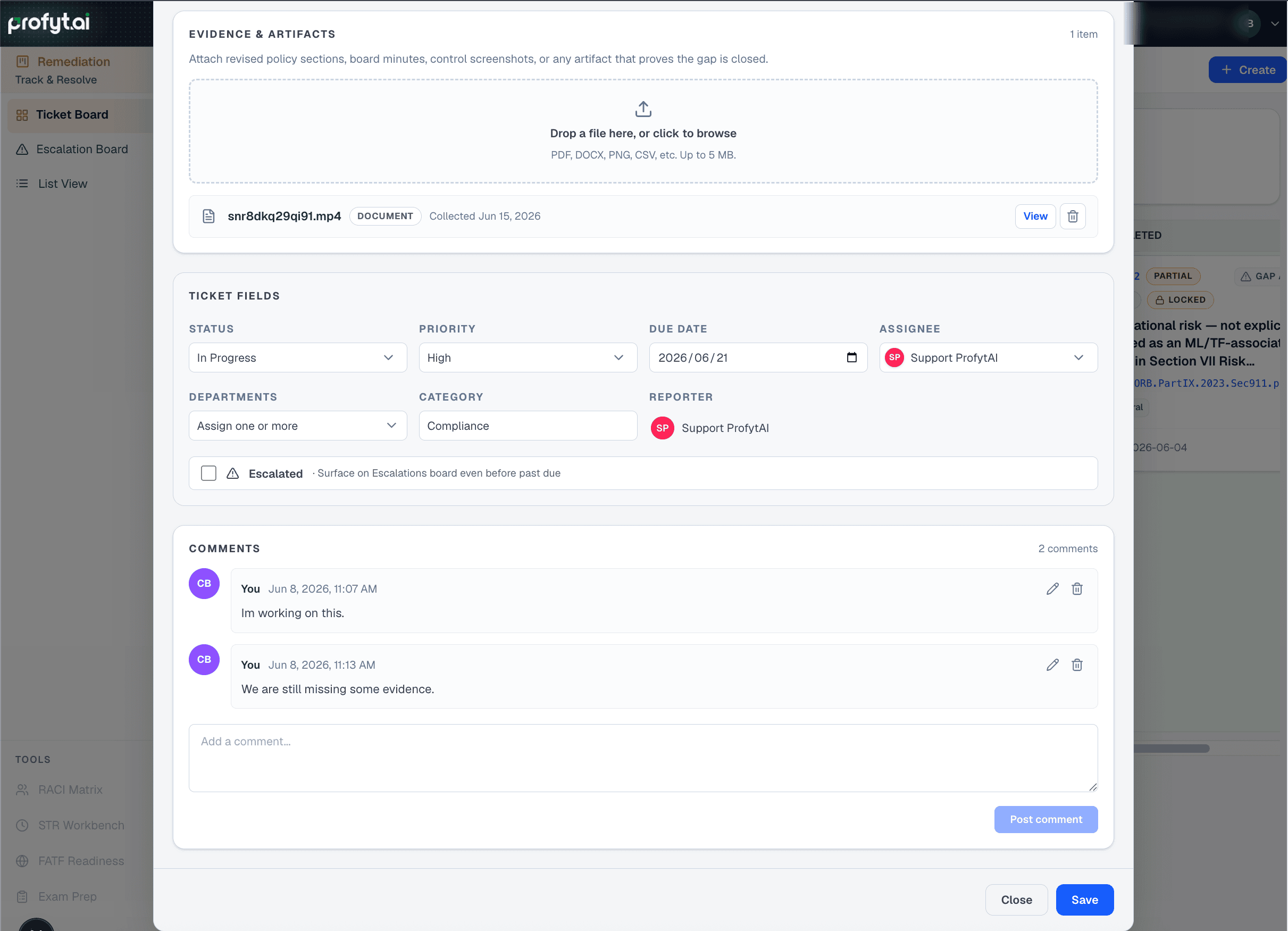
Attach the Proof
Closed means proven, not just marked done.
Evidence, fields, and comments live on the ticket, so closure is documented, not asserted.
Closure You Can Put in Front of an Examiner.
Nothing Falls Through
Owners, deadlines, and escalation in one place.
Closure You Can Defend
Every fix carries its evidence and its link to the rule.
A Live Program View
Where every gap stands, at a glance, for the whole team.
In production with a BSP-supervised digital bank in the Philippines. Live across BSP and MAS.
Exhibit · Evidence, Fields, and Comments · Closure Documented
The Business Case.
Zero
Actions tracked outside the system
Full Trail
Owner, deadline, and evidence on every closure
Priced against the coordination overhead and audit-prep scramble it removes.
Where It Sits.
Remediation receives findings from gap analysis and the regulatory feed, and feeds closure status into audit readiness.
Where Do Tickets Come From?
From a gap analysis finding or a regulatory feed issuance in one click, or created by hand.
Can We Model a Holding Period?
Yes. The workflow supports a monitoring and validation window before closure, which BSP and MAS supervision expect.
Does It Tie Back to the Obligation?
Every ticket carries the finding, its reasoning, and the obligation it closes.
Can We See What Is Overdue?
The escalation board surfaces overdue and escalated tickets automatically.
See Remediation End to End.
Book a demo and watch a gap move from finding to documented sign-off.